
Home EV charger installation: what is standard, what is not, and what costs extra
A plain guide to the survey, the cable run, the consumer unit, the DNO and the things that turn a simple job into a bigger one
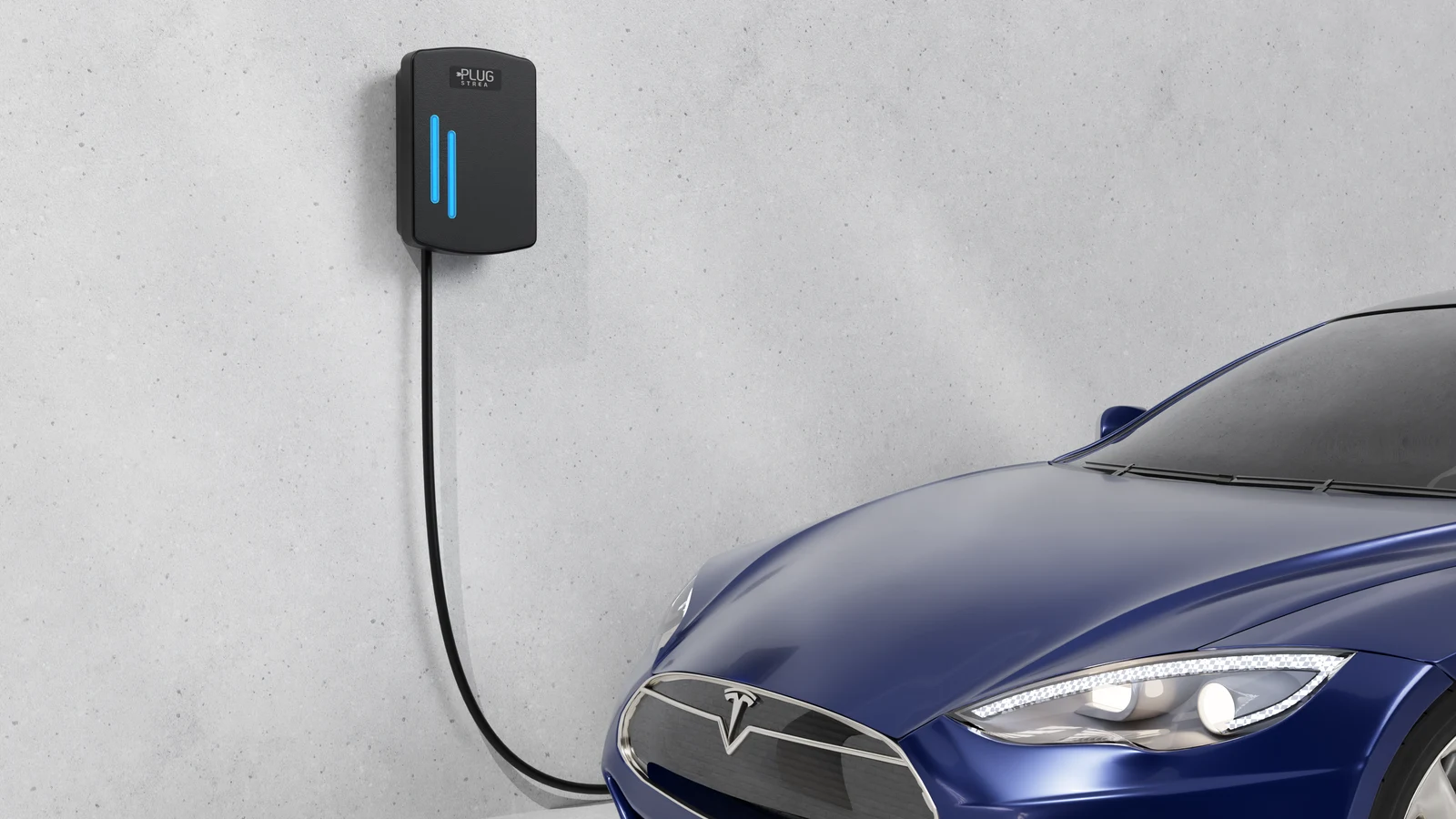
Most of what determines the price of a home EV charger installation has nothing to do with the charger.
It is the distance from your consumer unit to the wall you want the charger on. It is whether that cable can run along a surface or has to go through something. It is the state of the board it connects to, and whether your supply can take another dedicated circuit without a conversation with the network operator.
Two identical chargers, two identical houses on the same street, can produce quotes that differ by several hundred pounds for entirely legitimate reasons. This guide explains what those reasons are, so a quote is something you can read rather than something you have to trust.
Quick answer: what does a home EV charger installation involve?
A home EV charger installation involves a survey, a dedicated protected circuit from the consumer unit, a cable run to the charger position, mounting and connection of the unit, connectivity setup, commissioning and handover. Most homes with off-street parking and a reasonably modern consumer unit fall inside a standard installation.
The cost increases when the cable run is long, the route is difficult, the consumer unit needs work, or the supply needs assessment.
What a standard installation usually covers
There is no legal definition of "standard installation", which is precisely why it appears in every quote. Broadly, most suppliers mean:
- a survey, either remote or on site
- a dedicated circuit from your consumer unit with appropriate protection
- up to a stated cable length, commonly around 10 to 15 metres, run on the surface
- fixing the charger to a suitable, structurally sound wall or a post where included
- earthing arrangements appropriate to your supply type
- connectivity setup and commissioning
- testing, certification and notification of the work
- handover and app setup
The two words doing the most work in that list are stated cable length and on the surface. Almost every extra cost traces back to one of them.
What turns a job non-standard
A longer cable run. Detached garages, driveways at the far side of a property and consumer units in an awkward corner all add metres. Cable is charged by the metre, and beyond a certain length the cable size itself has to increase.
A difficult route. Surface-clipped cable along an internal wall is quick. Going through a solid external wall, under a floor, through a loft, along a boundary, or buried in a duct across a driveway is not. Buried runs in particular need proper depth, protection and reinstatement.
Consumer unit work. If the board has no spare way, or is an older type that cannot accept the required protective device, it may need a change or a separate enclosure. This is one of the most common reasons a quote lands higher than expected, and one of the easiest for you to check in advance.
Supply and earthing arrangements. Your supply type affects what earthing solution is required. Modern chargers commonly include integrated protection that avoids the need for a separate earth rod, but this is site-dependent and the installer will confirm it.
Available capacity. A property already running an electric shower, a heat pump, an electric hob and a home battery has less headroom than the average. This does not necessarily block the installation — it is often the reason to use load management, which lets the charger reduce output when the property is busy rather than requiring a supply upgrade. We covered how that behaves day to day in EV charger load management.
Scaffolding, height or access. Rare at home, but a first-floor or awkward-access position changes the job entirely.
Notifying the network operator
Your local Distribution Network Operator needs to know that a charge point has been added to the supply. In most home installations this is a notification made by the installer after the work. In some cases — higher-power installations, properties with limited capacity, or several devices on one supply — approval is needed before the work goes ahead.
This is normal, it is the installer's responsibility, and it is a reason to use a registered installer rather than a general electrician who does this occasionally.
Where the charger should actually go
The obvious answer is "wherever the car parks". The better answer accounts for four things at once.
Cable reach at the car. Where is the vehicle's charging port — front, rear, nearside, offside? Does the car reverse in or drive in? A charger positioned perfectly for one parking habit can be awkward for the other.
Distance from the consumer unit. Every metre has a cost. Sometimes moving the charger two metres saves fifteen metres of cable run.
Connectivity. Garage walls, external brick and metre-thick Victorian masonry are unkind to domestic Wi-Fi. This is worth testing with a phone before the position is agreed.
Whether you might want a second one. If a second EV is even a possibility, mention it. Planning the route once for two circuits is far cheaper than doing it twice.
Connectivity: the part people plan last and regret first
A smart charger without a reliable connection loses most of what makes it smart. Scheduling, tariff-aware charging, app control, firmware updates and remote support all depend on the charger being able to talk to the platform.
Three routes, in rough order of reliability:
- Ethernet — the most reliable, and worth it if a cable can reasonably reach.
- Wi-Fi — the usual choice. Test the signal at the exact position, not at the back door, and consider a mesh point if it is marginal.
- Mobile data — genuinely useful for detached garages, outbuildings and rural properties. PlugStream Connect provides managed data plans for exactly this situation.
Sorting connectivity at install time costs very little. Solving it six months later means someone comes back out.
Grants, flats and homes without a driveway
Grant support in the UK has shifted over the years away from households that already have a driveway and towards the harder cases: renters, flat owner-occupiers, landlords, and households without off-street parking. There are also workplace-focused schemes for businesses.
Because eligibility criteria and amounts change, check the current position on GOV.UK rather than relying on any supplier's summary, including ours. What is worth knowing structurally:
- grant-funded installations generally require an authorised installer and an eligible charge point model
- the paperwork is normally handled by the installer, not by you
- landlord permission is typically required for rented properties
- for homes with no off-street parking, the parking question comes first — cross-pavement solutions are a local authority matter, and the charger choice follows from what the council permits
Trailing a cable across a public footpath is not a solution, and no reputable installer will sign off an installation that depends on it.
What to send before asking for a quote
You can turn a vague estimate into an accurate one with about five minutes and a phone camera:
- a photo of your consumer unit with the door open, showing the spare ways
- a photo of the meter and main fuse
- a photo of the intended charger position
- a rough measurement, or even a pace count, from the consumer unit to that position
- a note of the route between them — internal, external, through a wall, under a floor
- your vehicle make and model, and which side the charging port is on
- anything power-hungry already installed: electric shower, heat pump, hob, solar, home battery
- a Wi-Fi signal check at the charger position
If you already know you want a specific unit, the PlugStream quote builder will take you through the options, and Home charging covers how the PlugStream 7 range fits different properties.
On the day, and what good handover looks like
Expect isolation of the supply for part of the work, some drilling, and a period where the installer is testing rather than visibly doing anything.
Before the installer leaves, you should have:
- the charger working, with a successful test charge if your vehicle is available
- the app set up, the charger paired and online
- the electrical installation certificate, or confirmation it is coming
- confirmation the DNO notification has been made
- your warranty details and the model and serial recorded
- a clear explanation of what the status indicators mean
That last point matters more than it sounds. Most first-month support calls are not faults — they are a charger correctly waiting for a schedule, a vehicle that has gone to sleep, or a load-management pause. Knowing the difference saves everyone a phone call, which is why Charger Readiness surfaces those states in plain language.
PlugStream chargers also carry their own record through PlugStream Passport, so the model, serial, warranty position and setup route stay attached to the unit rather than to a piece of paper in a kitchen drawer.
Common ways a home install goes wrong
- Choosing the position before checking the Wi-Fi. Easily the most common regret.
- Not mentioning the second car. The route gets planned once.
- Assuming the consumer unit is fine. Look at it before you get quoted, not after.
- Comparing quotes without comparing scope. A cheaper quote with a 10m allowance is not cheaper than a dearer one with 20m if you need 18m.
- Forgetting the vehicle's own settings. A car with its own departure schedule can quietly override what you set in the charger app.
- Ignoring the parking reality. Where the car actually sits at 7pm matters more than where it sits at the weekend.
Related PlugStream guidance
Start with Home charging to compare the PlugStream 7 range, then use the quote builder to price a configuration.
For the features that follow installation, read the EV charging features guide, smart tariff EV charging and, if your site needs more than one measurement point, EV charger CT clamps.
FAQ
Home installation questions
How long does a home EV charger installation take?
A straightforward installation is usually a half-day to a day on site. Longer cable runs, consumer unit work, or a difficult route through the property can extend that. The survey should tell you which of these applies before the installer arrives.
What counts as a standard installation?
Definitions vary between suppliers, but a standard install typically covers a set cable length from the consumer unit to the charger, surface-mounted cable, fixing to a suitable wall, a dedicated protected circuit, and commissioning. Anything beyond that length, buried or hidden cable, consumer unit replacement, or a supply upgrade is usually chargeable as an extra.
Do I need to tell my electricity network operator?
Your installer handles this. Most home charger installations are notified to the local Distribution Network Operator after the work, but some situations require approval before the installation goes ahead. This is a normal part of the job, not a complication you need to manage yourself.
Can I get an EV charger if I do not have a driveway?
It depends on whether you can charge without trailing a cable across a public footpath. Some councils operate cross-pavement solutions and there are grant schemes aimed at households without off-street parking. Start with your local authority, because the parking situation determines what is possible before any charger choice matters.
Do I need Wi-Fi where the charger is fitted?
A smart charger needs a connection to deliver scheduling, tariff features, app control and updates. Wi-Fi is the common route, but garage and driveway walls are exactly where domestic Wi-Fi tends to be weakest. Ethernet or a mobile data route can be more reliable, and it is much cheaper to plan for that during the install than to solve it afterwards.
Can I install a home charger myself?
No. A home charge point installation is notifiable electrical work on a dedicated circuit with specific protection requirements. It must be carried out by a suitably qualified and registered installer, and doing otherwise affects safety, warranty, insurance and grant eligibility.
Explore More
Compare the PlugStream range
See how PlugStream 7S, PlugStream 7T, and the PlugStream 22 family fit different homes, commercial sites, and daily charging routines.