
18th Edition Amendment 4: what it means for EV charging and home energy systems
Why the 2026 Wiring Regulations update matters for batteries, solar, bidirectional charging and smarter homes
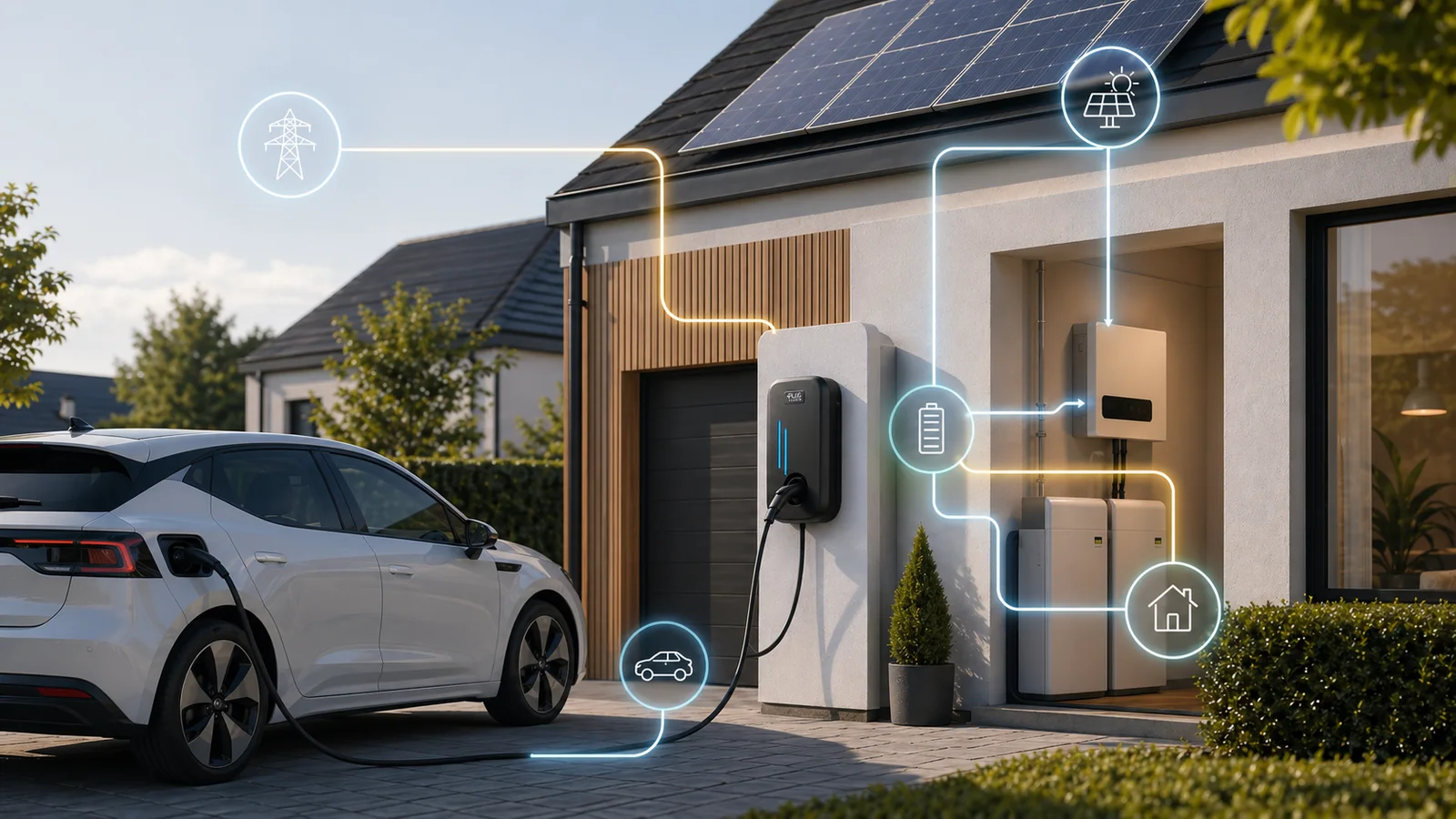
The home EV charger is no longer a standalone box on the wall. For many households, it is becoming part of a wider energy system: solar PV, battery storage, smart tariffs, load management, and in time, vehicle-to-home or vehicle-to-grid services.
That is why Amendment 4:2026 to BS 7671:2018, the 18th Edition of the IET Wiring Regulations, matters.
The IET and BSI published Amendment 4 on 15 April 2026. The previous version, BS 7671:2018+A2:2022+A3:2024, remains in use during the transition period and is due to be withdrawn six months after publication, on 15 October 2026. In practical terms, installers, specifiers, manufacturers and energy professionals now have a clearer direction of travel for modern low-voltage electrical installations.
For EV charging, the most important point is not that Amendment 4 turns every home into a battery project overnight. It is that the Wiring Regulations now better reflect the way homes are actually changing.
What has changed?
Amendment 4 introduces a new focus on stationary secondary batteries, reflecting the rapid growth of home and commercial energy storage. According to the IET, the update covers areas such as system design, power conversion equipment, bidirectional or hybrid inverters, protective devices suitable for two-way energy flow, battery location, ventilation, and fire-risk mitigation.
That matters because the modern home energy picture is becoming more connected.
A property may now include:
- a smart EV charge point
- solar PV generation
- a home battery
- a hybrid inverter
- time-of-use energy tariffs
- site metering and load control
- future bidirectional charging capability
Each part can be useful on its own. The real value comes when the parts are designed to work safely together.
Why this helps EV charging
EV charging is often the largest flexible electrical load in the home. A 7.4kW charger can draw more power than many everyday household circuits, but unlike a shower or oven, it can usually be scheduled, paused, reduced, or shifted into cheaper and greener windows.
Amendment 4 helps by strengthening the regulatory backdrop around the wider systems that sit beside the charger.
It supports whole-home design
The best EV charging installations look at the property as a system, not just the charger position. That means checking available supply capacity, earthing arrangements, protective devices, cable routes, metering, solar generation, battery storage, and the customer's charging routine.
Clearer requirements for batteries and power conversion equipment should help installers design systems where the EV charger, inverter and storage equipment are coordinated from the start.
It recognises two-way energy flow
Homes used to be designed mainly around electricity flowing in one direction: from the grid to the property. Solar PV, batteries and future vehicle-to-home systems change that.
Where electricity can flow in more than one direction, equipment selection becomes more important. Protective devices, inverters, metering and control systems all need to be suitable for the way the installation will actually operate.
That is especially relevant to EV charging as the market moves towards vehicle-to-home and vehicle-to-grid services. Even where a household is only installing a standard AC charger today, it makes sense to avoid closing the door on smarter energy options later.
It makes storage safety more visible
Battery storage can help households use more of their own solar energy, reduce peak-time demand, and provide resilience. But batteries also need careful design decisions around location, ventilation, access, fire risk and equipment compatibility.
By bringing more attention to stationary secondary batteries, Amendment 4 should make those conversations more normal during domestic energy planning.
What homeowners should take from it
If you are planning a home EV charger, Amendment 4 is a reminder to think beyond today's vehicle.
The useful questions are:
- Will I add solar PV or battery storage later?
- Do I need the charger to work around a limited property supply?
- Can charging be shifted into off-peak tariff windows?
- Would solar-aware charging help me use more on-site generation?
- Do I want the installation to be ready for smarter energy services in future?
- Is the installer designing the charger as part of the whole electrical system?
The answer does not need to be complicated. Most homes still need a clear, reliable charge point that works every day. But asking these questions early can avoid awkward upgrades later.
Where PlugStream can help
PlugStream is built for the home energy system that is now emerging around EV charging.
For domestic installs, PlugStream 7S and PlugStream 7T provide 7.4kW single-phase charging with smart scheduling, solar-aware charging support, automatic load management and app visibility. That helps households charge at the right time, make better use of available power, and understand what the charger is doing.
Automatic load management is particularly important. Instead of treating the charger as an isolated demand, PlugStream can help balance charging against the wider property load so the system makes better use of the supply already available.
Solar-aware charging support helps households align EV charging with on-site generation when the right metering setup is in place. For customers with solar PV, that can turn the car into a more useful part of the home energy routine.
The MyPlugStream app also gives drivers more visibility over charging sessions, schedules and charger readiness. That matters because smart charging is only helpful when the customer can understand what is happening and why.
For installers and energy partners, PlugStream's connected platform, over-the-air updates and OCPP-ready software approach help keep the charger adaptable as site requirements, tariffs and energy services evolve.
A practical way to look at Amendment 4
Amendment 4 is not just another compliance milestone. It is a sign that domestic electrical installations are moving from simple consumption towards active energy management.
For EV drivers, that is good news. A well-designed home charging setup can be safer, more flexible and more useful when it is planned alongside solar, storage, tariffs and future energy services.
The important caveat is that the installation still needs to be designed, installed, inspected and certified by competent professionals working to the current requirements of BS 7671 and any other applicable standards.
PlugStream can help with the charge point, the software experience and the smart controls around everyday charging. A qualified installer brings that into the full electrical design of the property.
Together, that is where the real benefit sits: a charger that does more than fill the car, and a home energy system that is ready for what comes next.
Further reading: IET and BSI publish Amendment 4:2026 to BS 7671 and IET Amendment 4 updates.
Explore More
Compare the PlugStream range
See how PlugStream 7S, PlugStream 7T, and the PlugStream 22 family fit different homes, commercial sites, and daily charging routines.